Recently my friend Paul Kurzenberger brought me a photograph of a postcard showing the location of the old stone signpost that once stood at the intersection of Ferry Road and Locktown-Flemington Road.
One item in Charles Sergeant’s will of 1833 is of particular interest to us. It concerned a farm of 130 acres which he had bought from Joseph Sergeant, and which was occupied at that time by Jonathan Rittenhouse. Sergeant ordered that it be sold and the profits divided among his heirs. This was the old Richard Green farm which Charles Sergeant had kept after buying it back from his brother Joseph in 1818. After Joseph Sergeant left the premises, Charles Sergeant rented the farm to a tenant—Jonathan Rittenhouse.
This is the next article in my series on the history of the Pauch farm in Delaware Township. In the previous post,1 Charles Sergeant had sold the old Richard Green farm to John R. Opdycke in 1805, and moved to the farm owned by Opdycke’s father, Samuel Opdycke. John Opdycke had no need for the Green farm. He had married in 1803 and was living in Kingwood on land that came from his wife’s family. Why did Opdycke make this swap? I suspect he wanted to close out his father’s estate, and this was one way to do it. Or, perhaps Sergeant knew how eager Opdycke was to settle matters and proposed a swap instead of an outright purchase.
I’ve been baffled by the genealogy of this family, finding it impossible to be certain about their origins. In the process of researching the next chapter in the history of the Pauch farm, I came upon two conflicting sources for this question.
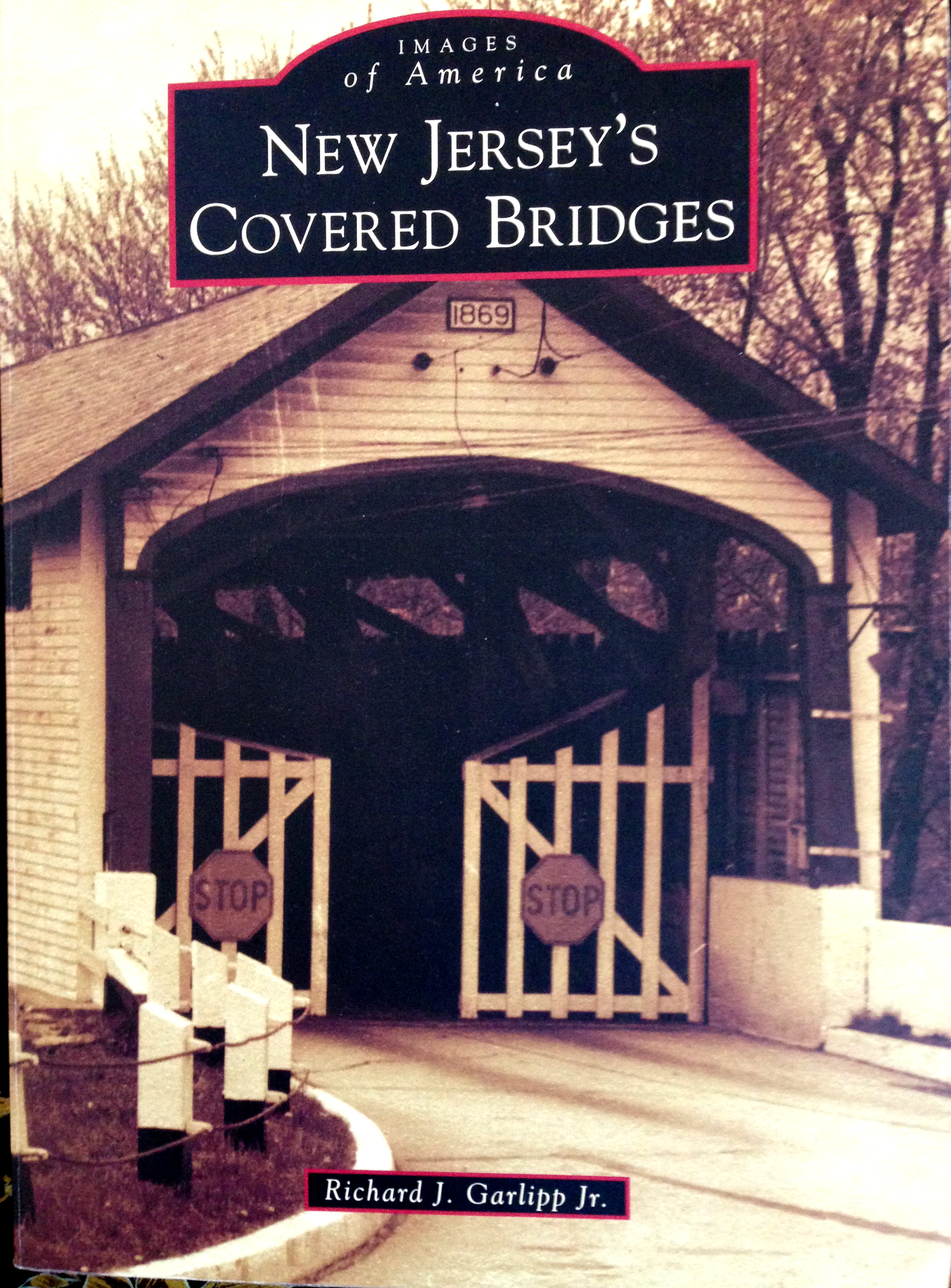
Richard J. Garlipp, Jr. New Jersey’s Covered Bridges, Images of America, Arcadia Publishing, 2014.
New Jersey’s Covered Bridges by Richard J. Garlipp, Jr.
If you’ve ever had first hand knowledge of a story in the newspaper, chances are you’ve said to yourself, “the reporter got it wrong.” This also happens with books, including this one. Mr. Garlipp has long been a student of the history of covered bridges, and has undertaken a large and under-reported subject. But Arcadia books are not held to a very high standard and do not engage in fact-checking, so the results are sometimes a disappointing mixture of fact and fantasy. History is challenging, and mistakes are all too easy to make, as I have often learned to my dismay. I just wish this book had been better.
This is the second part of my article on how to do a house history, published March 29th. If you followed through with that article, you will now have a more or less complete chain of title. So, what next?
Step Four. Flesh Out the Story
A chain of title for your property is wonderful to have, but, really, all it is is a list of names, dates and sources. There’s no story there. It’s not really very interesting until you start digging and learn about who these people were, what their lives were like. Were they rich, poor, farmers, merchants? Were they important in their community? Did they get into trouble? This is where genealogical skills come into play.
Most people who decide to research their properties head straight to the Search Room in the County Clerk’s Office to find the earliest deed they can. I understand the impulse—that’s exactly what I did over 30 years ago. But experience has taught me there is a better way to get started. I recently gave a talk on this subject for the Hunterdon County 300th Anniversary speakers’ series. It gave me a chance to boil down my approach to a few simple rules. Here they are:
This article is a continuation of the history of the Pauch Farm in Delaware Township, first owned by Richard Bull in 1702, then by Samuel Green, then by Green’s son Richard, and now Richard’s granddaughter Sarah and her husband Charles Sergeant in 1794. Ninety-two years in the same family, and counting.
by Jonathan M. Hoppock published in the Democrat-Advertiser, July 20, 1905
This article is a follow up to the one published in 1901 titled “Sergeant Mansion and Mill, 1745.” Some of the information in this article was taken directly from the earlier one. Perhaps Mr. Hoppock figured no one would remember what he had written before. I am publishing these articles on the website because there are errors and this is a good way to make note of them.
by Jonathan M. Hoppock published in the Democrat Advertiser, December 5, 1901
This interesting old property deserves a much longer treatment than Mr. Hoppock was able to give. He did return to this subject when he published “The Old Sergeant Mill” on July 20, 1905. However, that article was focused on the mill, rather than the house—the mill was located just north of the house, but has since been torn down. The most remarkable thing about the house is that it has been in the same family since Charles Sergeant and wife Sarah Green took possession in 1805, over 200 years.1