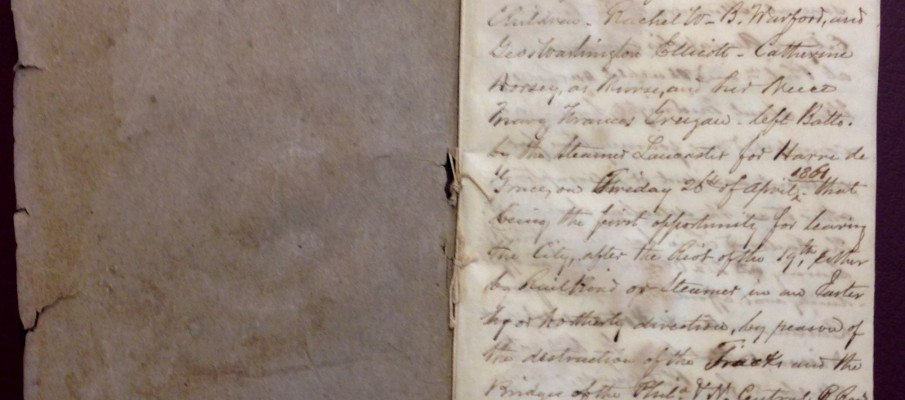
While processing the reams of archived material at the Hunterdon County Historical Society, archivist Donald Cornelius came upon a handwritten diary composed during the years of the Civil War. He was stunned and thrilled by what he found, a personal journal from a resident of Locktown written during those stressful years, 1861-1863. I am equally thrilled that he shared his find with me. Since the Civil War officially ended 150 years ago on April 9th, I would like to share with you the first pages of this fascinating document, written by Benjamin Harvey Ellicott.
Locktown
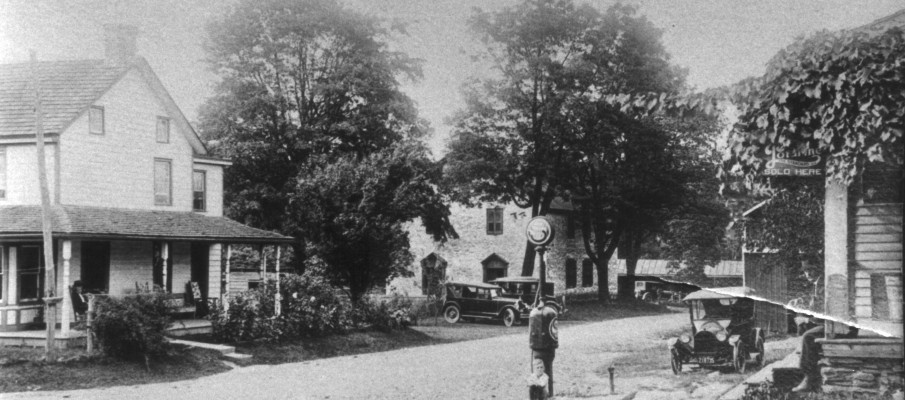
LOCKTOWN was once a very busy place, with two churches, a school, a tavern, a creamery and grange, store and post office, as well as a blacksmith shop. Three Locktown roads intersect here: the Locktown-Sergeantsville Road, the Locktown-Kingwood Road, and the Locktown-Flemington Road. The earliest family to settle here was the Heath family.
Some Controversial Baptist Ministers
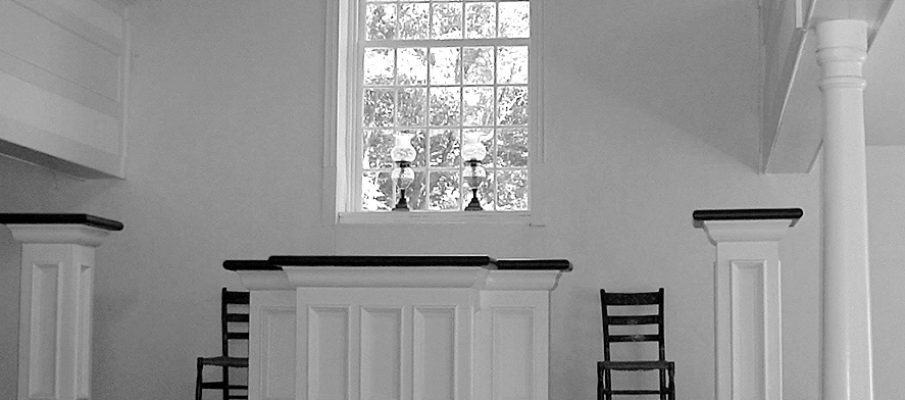
My original intention was to publish an article by Jonathan M. Hoppock on the history of the Baptist Church in Locktown. And that is what I will do here, but after reading his article, I discovered that some of the ministers he listed had troubled careers, and that, of course, makes them interesting. But first, here is Mr. Hoppock’s history of the Church.
How Locktown Got Its Name
Back in February, I published an article on the cemetery connected with the Locktown Baptist church. Previously I have written about the Baptist congregation here as well as the Locktown Christian Church and its Cemetery. It seems appropriate now to include Mr. Bush’s own history of this neighborhood, which was published in the Hunterdon Democrat, on May 22, 1930. Along with the churches, Mr. Bush discusses the school house, the distillery and the Locktown Hotel, which began its life as a humble tavern, and also some of the old families, like the Chamberlins, Heaths, Lairs, Rittenhouses, Smiths and Suttons. Photographs in this article were provided by Paul Kurzenberger.