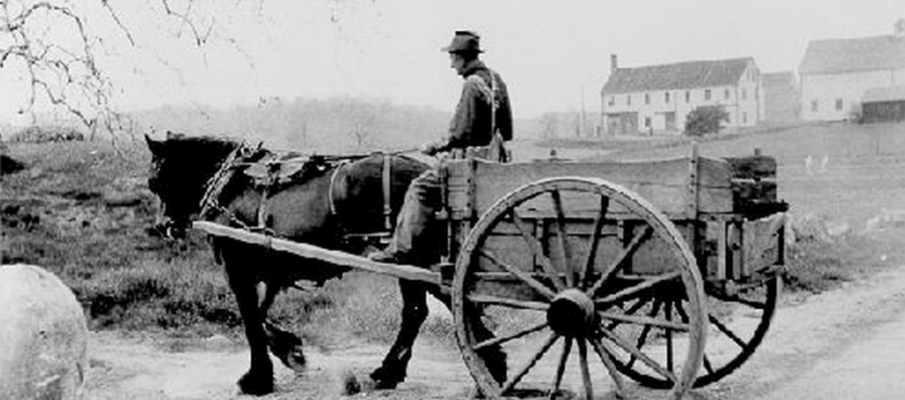
First Trip to Delaware River Kilns an Experience for a Boy
Spoke Making a Lost Trade
by Egbert T. Bush, Stockton, N. J.
published in the Hunterdon Co. Democrat, April 21, 1932
 In recognition of the belated arrival of spring, I offer Mr. Bush’s tale of how farmers got lime for their fields in the mid 19th-century. And among those “Other Things,” Mr. Bush describes the business of spoke making.
As our forests were cut off and the stumps rotted away, the land was found to be or soon to become more or less sour. The sorrels began to grow plentifully, especially the tall, reddish brown one that we called “horse sorrel.” That was later known as a sure indication that the land needed lime, tho in the earlier stages little was known about sour land or the indications, or even about lime as a sweetener. Such knowledge, like almost every other kind, grew gradually with experience and observation, until science took hold of such matters and showed us to be sometimes on the right track without knowing exactly why.