

Benjamin H. Ellicott’s Diary for May 1863 is full of very dramatic War News: Confederate incursions into western Pennsylvania and West Virginia, the assault on Fredericksburg and the failures of General Hooker and the Army of the Potomac, the battles of Chancellorsville and Spotsylvania, the death of Stonewall Jackson, capture of British vessels by Federal gunboats enforcing the blockade of Charleston, and Grant’s continued assault on Vicksburg.
Hunterdon
Family Burying Grounds Matter
The following is the keynote speech I delivered on September 19, 2015 for the 2nd Annual Cemetery Seminar, sponsored by the Hunterdon Co. Historical Society and others. It is somewhat modified to make it more readable, less like a speech.
A Pirate in Old Amwell
When writing about Pine Hill Cemetery recently, the name of John Lewis came up. This reminded me of a wonderful article written by Jonathan M. Hoppock back in 1905 about a mysterious character named Ticnor Lewis who lived not far from Pine Hill. It is one of Mr. Hoppock’s most colorful yarns, and one of his many stories of the early settlers in Amwell Township. This one is based entirely on folklore or family tradition. A bowl-full of salt is highly recommended.
Pine Hill Cemetery, Revisited
Pine Hill Cemetery is one of the most interesting of the old family burial grounds in Hunterdon County. I have written about it before, in an article that listed the known graves with some biographical information. But I had just scratched the surface; there is so much more to be said.
Fisher-Reading Mansion
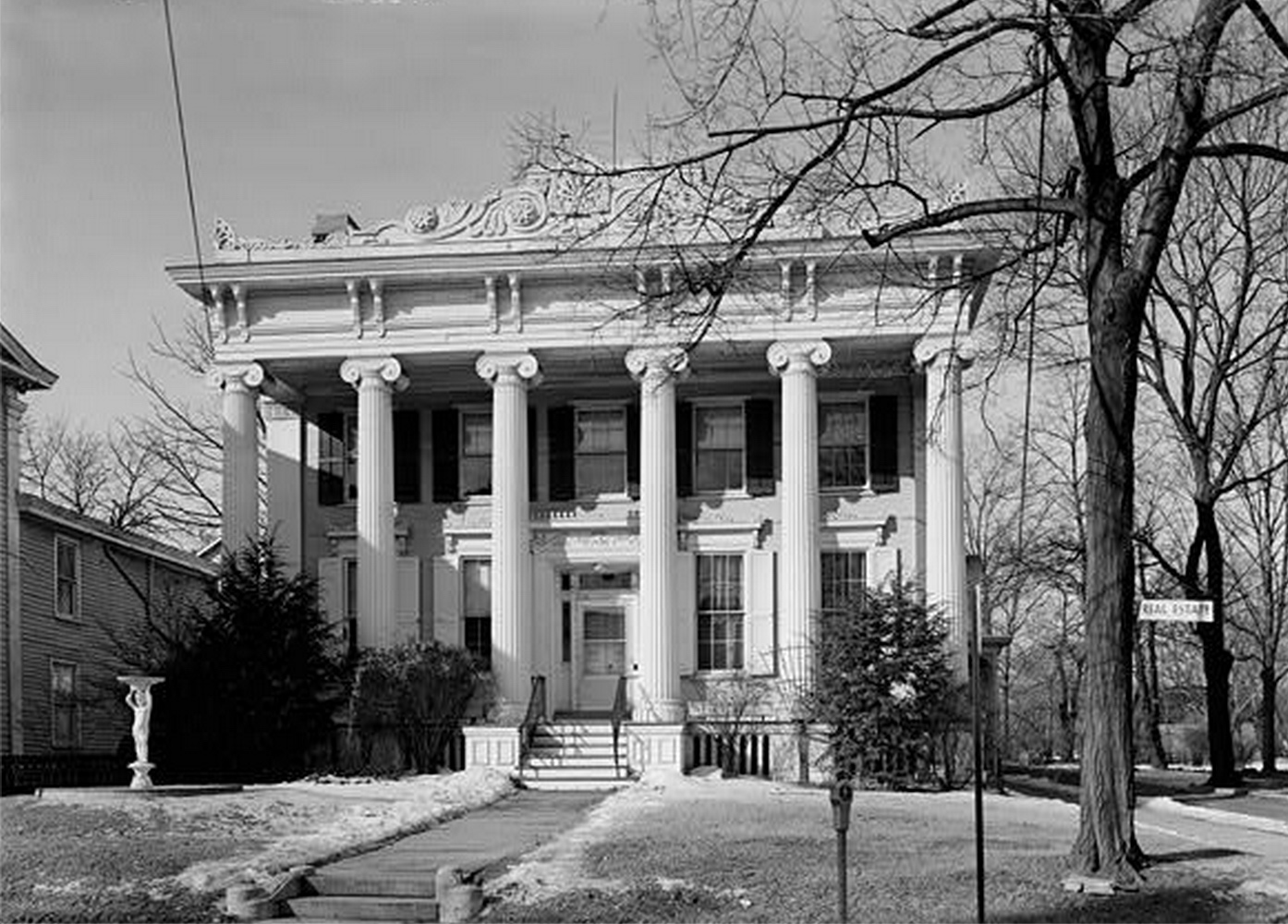
Beautiful, isn’t it? One of the most extraordinary buildings to be found in Flemington, a town with more than its share of great old buildings. It is an outstanding example of Greek Revival architecture.1
Rittenhouse Road
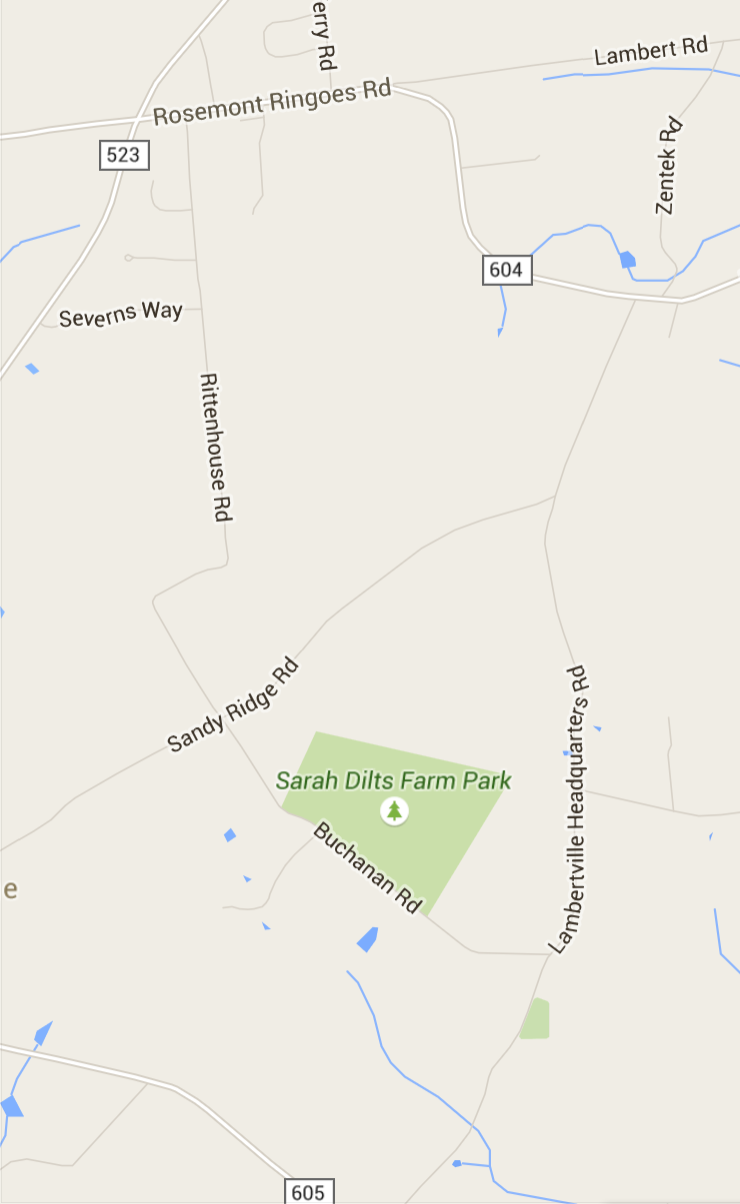
There is an odd sort of road in Delaware Township, running south from Sergeantsville, that I have often wondered about. It is called Rittenhouse Road, and for much of its length, it runs straight as an arrow, then suddenly does a zigzag before ending at Sandy Ridge Road.
Quite often the very straight roads in Hunterdon County were created as a result of the early, large proprietary tracts that forced roads to run along their borders. But that is not the case here. This road ran through the middle of Daniel Robins’ 700+ acres, surveyed in 1722.
A Barn Raising Was A Big Event
Feeding Fifty Men Was Not Uncommon on Such an Occasion
Eatables in Great Abundance
by Egbert T. Bush, Stockton, N.J.
originally published by the Hunterdon Co. Democrat, July 24, 1930
Note: I have included the punctuation as it appeared in the original article, even though I disagree with the editor’s use of commas, and wonder if that was how Mr. Bush wrote it. Also, when Mr. Bush refers to “the young generation,” he means people born in the late-19th and early 20th-century. Mr. Bush was born in 1848.
Rittenhouse Cemetery, part two
This is the conclusion of my article on the Rittenhouse Cemetery overlooking Prallsville, on the border between Delaware Township and Stockton Borough. For a discussion of the earliest stone and of the history of its ownership, see Rittenhouse Cemetery, part one.
The Rittenhouse Cemetery, part one
Several years ago (in 2007), me and my cemetery buddies (pardon the grammar) visited the mysterious and lovely Rittenhouse Cemetery overlooking the old Prallsville quarry. I have wanted to write about this place for some time, but put it off because of concern that by making it known it would be more vulnerable to vandals. It appears that my restraint did not make much difference. Bob Leith visited recently and found one of the stones with graffiti and another one with a shotgun blast to its face. So, there is not much point in secrecy anymore. But there is another reason why I am inspired to write about the cemetery now. It has to do with the oldest stone there.
The Kitchen Cemetery
Also known as the Thatcher Cemetery,
but is not to be confused with the Thatcher Burying Ground in Sergeantsville.
One of the most interesting private cemeteries in Delaware Township lies hidden among the trees on an old farm located near Routes 523 and 579. In 1931, Egbert T. Bush wrote that half of the cemetery was located on the Thatcher farm and half on a farm owned by A. J. Dalrymple. Bush identified a few of the stones, and on a visit in 1995 I found a few more, for a total of 18 gravestones with initials.1