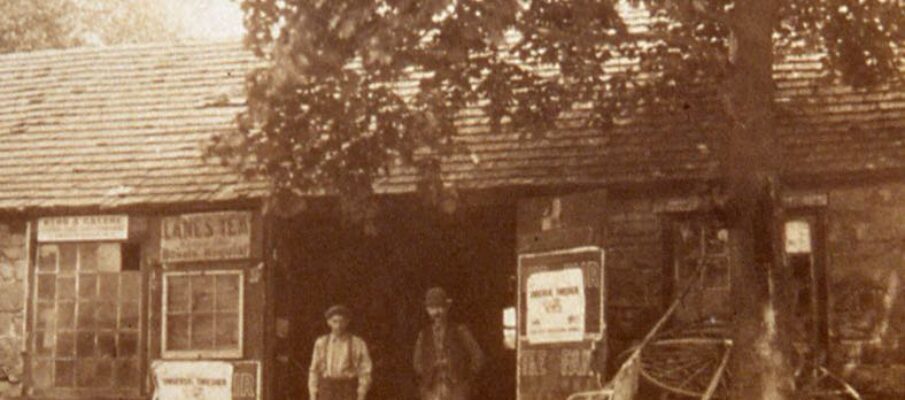
Near the center of the village of Locktown stands a 19th-century church and its parsonage, waiting for a new owner. The congregation that has been worshipping in this church for the past 30 years or so is joining with the Calvary Orthodox Presbyterian Church on Route 202 in Flemington, so the Locktown property must be sold.
A Chestnut That Acted As Host to a Younger Tree
– Biggest Oak of Them All
by Egbert T. Bush, Stockton, N.J. published in the Hunterdon County Democrat, January 1, 1931
This month is a big allergy month for me, so I looked up what Mr. Bush had to say about trees. Turns out—quite a lot. Bush had a great affection for the grand old trees that had survived the previous century, and frequently mentioned them in his articles. Now that our trees are leafing out, it seems appropriate to publish this essay. The willow described here once stood in front of Roger Byrom’s house in Headquarters.
This article is the last in the series on the Pauch Farm of Delaware Township. For the previous articles please click on “Pauch Farm” in the Topics list to the right.
Recently my friend Paul Kurzenberger brought me a photograph of a postcard showing the location of the old stone signpost that once stood at the intersection of Ferry Road and Locktown-Flemington Road.
One item in Charles Sergeant’s will of 1833 is of particular interest to us. It concerned a farm of 130 acres which he had bought from Joseph Sergeant, and which was occupied at that time by Jonathan Rittenhouse. Sergeant ordered that it be sold and the profits divided among his heirs. This was the old Richard Green farm which Charles Sergeant had kept after buying it back from his brother Joseph in 1818. After Joseph Sergeant left the premises, Charles Sergeant rented the farm to a tenant—Jonathan Rittenhouse.
This is the next article in my series on the history of the Pauch farm in Delaware Township. In the previous post,1 Charles Sergeant had sold the old Richard Green farm to John R. Opdycke in 1805, and moved to the farm owned by Opdycke’s father, Samuel Opdycke. John Opdycke had no need for the Green farm. He had married in 1803 and was living in Kingwood on land that came from his wife’s family. Why did Opdycke make this swap? I suspect he wanted to close out his father’s estate, and this was one way to do it. Or, perhaps Sergeant knew how eager Opdycke was to settle matters and proposed a swap instead of an outright purchase.
I’ve been baffled by the genealogy of this family, finding it impossible to be certain about their origins. In the process of researching the next chapter in the history of the Pauch farm, I came upon two conflicting sources for this question.
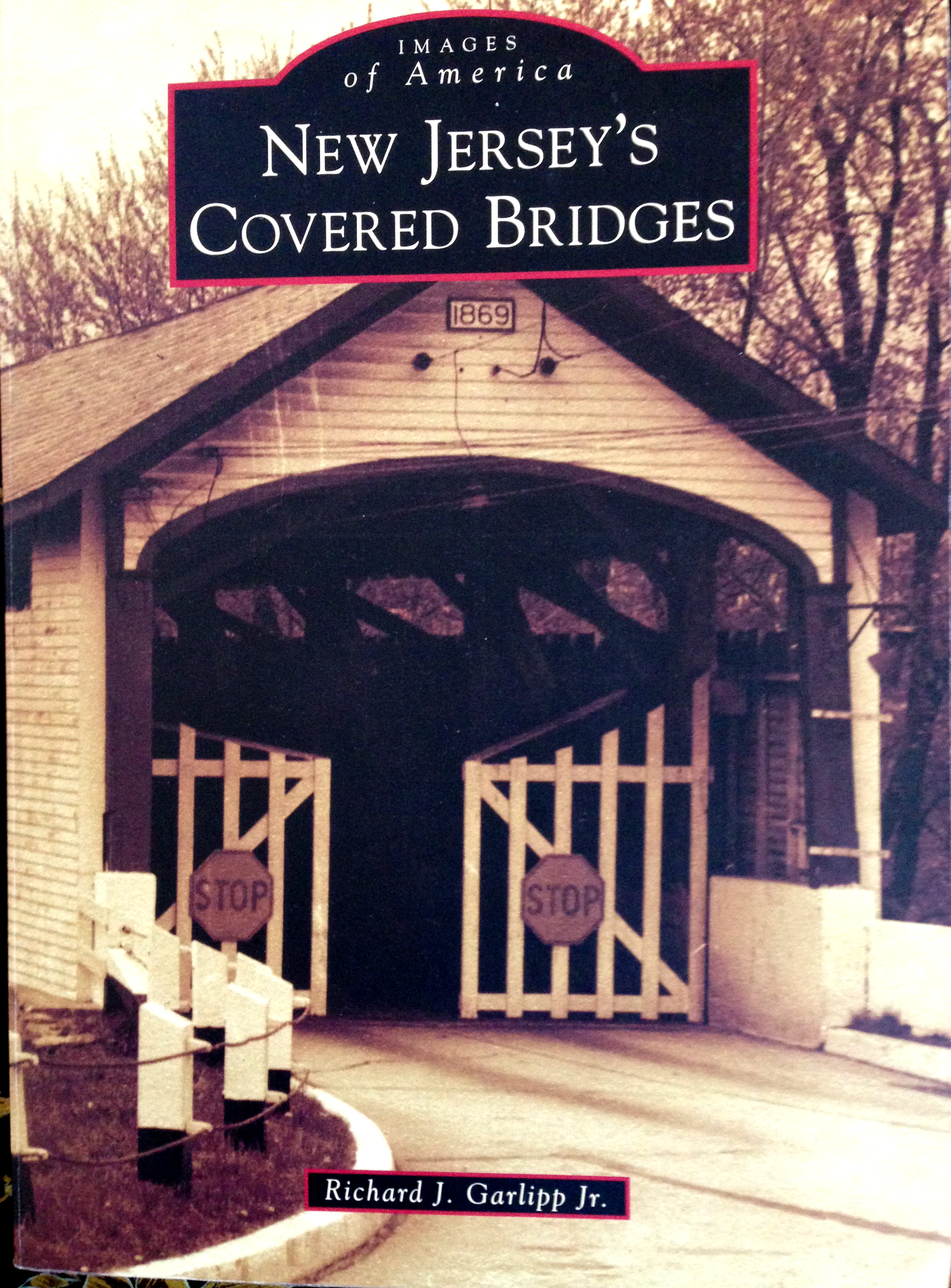
Richard J. Garlipp, Jr. New Jersey’s Covered Bridges, Images of America, Arcadia Publishing, 2014.
New Jersey’s Covered Bridges by Richard J. Garlipp, Jr.
If you’ve ever had first hand knowledge of a story in the newspaper, chances are you’ve said to yourself, “the reporter got it wrong.” This also happens with books, including this one. Mr. Garlipp has long been a student of the history of covered bridges, and has undertaken a large and under-reported subject. But Arcadia books are not held to a very high standard and do not engage in fact-checking, so the results are sometimes a disappointing mixture of fact and fantasy. History is challenging, and mistakes are all too easy to make, as I have often learned to my dismay. I just wish this book had been better.
Taxes Were “Outrageous” When Rate Was 40¢ per $1 00.
Cutting Sausage with an Axe
by Egbert T. Bush, Stockton, N. J. published in the Hunterdon County Democrat, February 23, 1933
Comment: Unlike my usual practice, I have nothing to add to this very contemplative article. A passing knowledge of scripture and of the writings of Ralph Waldo Emerson would be helpful. It is interesting that Bush combines the subjects of sausage making and paying taxes. There’s an echo here of the common association of sausage making with passing laws, from whence we get the burden of taxation. Bush’s thoughts on this subject are well worth contemplating, in particular his opinion that those who complain the most about their taxes should think about what they demand of government.