There was a time when the sleepy little village of Quakertown was a lively place, back when it had two taverns. I learned this from Egbert T. Bush, who wrote a couple articles about the village.
Since I am focusing on taverns these days, I will publish parts of Mr. Bush’s first article on the village, the parts concerning its taverns.
Interesting Facts About Quakertown
by Egbert T. Bush, Stockton, N.J.
Hunterdon Co. Democrat, February 27, 1930
There are so many interesting points about Quakertown that one does not know where to begin.
This is an article by Egbert T. Bush about the village of Cherryville in Franklin Township, Hunterdon County. It serves as a follow-up to my article on the earliest owners of the Cherryville Tavern, back when the village was known as Anderson Town, after the early tavern owner, James Anderson.
Cherryville, Once Called Dogtown,
Has Long History
Nobody Knows When the Old “Dogtown Tavern” Was Built
Some Neighborhood History1
by Egbert T. Bush, Stockton, N.J.
Hunterdon Co. Democrat, December 19, 1929
This article will be followed by one written by Egbert T. Bush titled “Cherryville, Once Called Dogtown, Has Long History.” He knew the Cherryville Tavern was an old tavern, but could only get back as far as Reuben McPherson, who owned it from 1827 until his death in 1831.
In preparing to publish Mr. Bush’s article on the Klinesville neighborhood, I found so many interesting people and places that it became too difficult to add all my comments as asides to the Bush article. So, I’ve collected some of them in a separate article. They are listed here in the order in which Mr. Bush mentioned them in Klinesville Once Had A Tavern.
In recognition of Labor Day this weekend I thought it would be interesting to see what labor was like when Egbert T. Bush was young. He would have been fifteen years old in 1863, during the Civil War. Since he was too young to be drafted, he was available to the neighborhood farmers who were short-handed, thanks to the war. His employer in those days left a big impression on the young man.
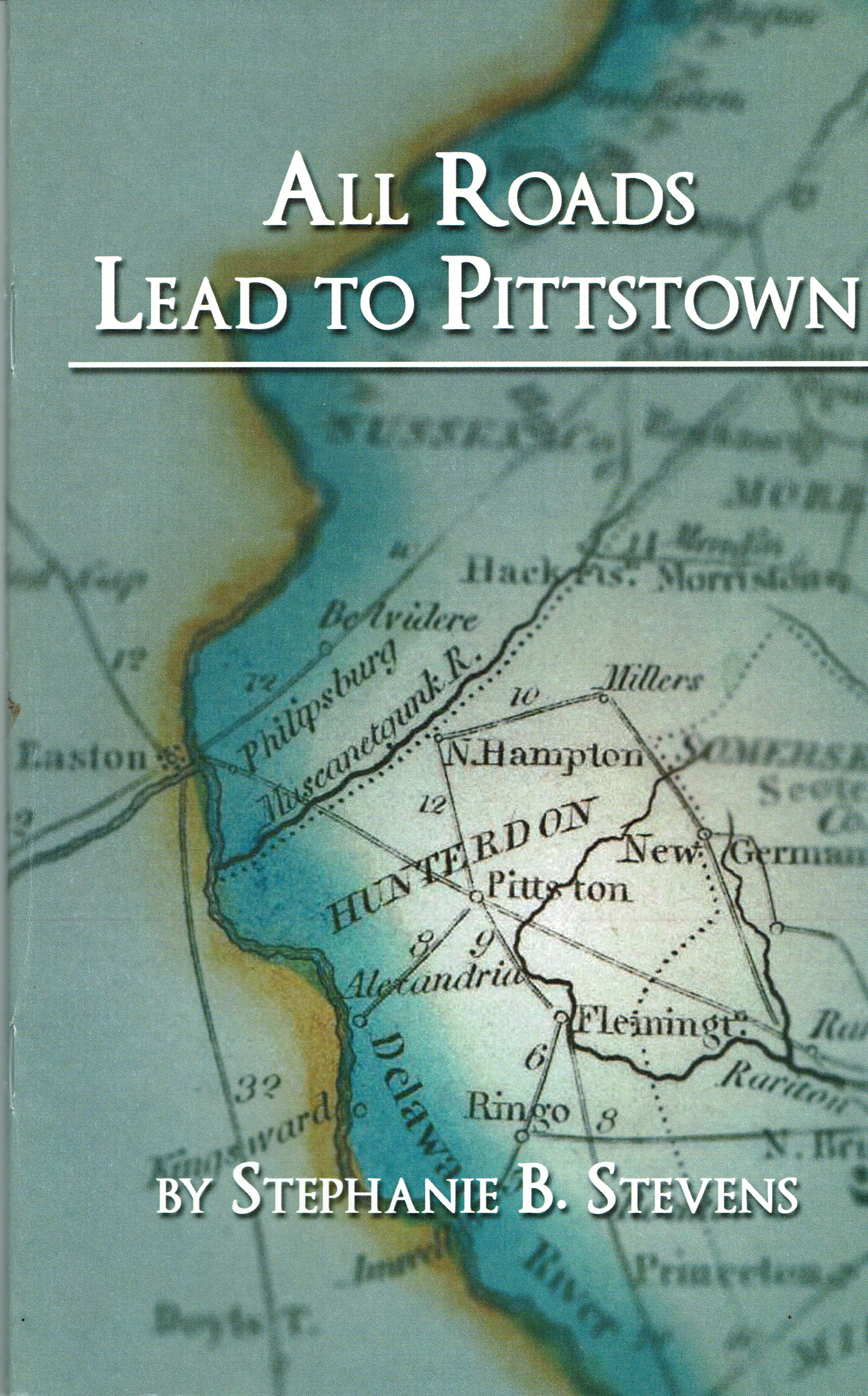
In My Library: “All Roads Lead to Pittstown” by Stephanie B. Stevens
Better late than never. I’ve finally read Stephanie Stevens’ book All Roads Lead to Pittstown, published by the Hunterdon County Cultural and Heritage Commission. What a fascinating story she has to tell. I was dimly aware of Pittstown’s role in the Revolution, but what Stephanie has found adds enormously to our knowledge of the time. She managed to find references to Pittstown (specifically the mills of Moore Furman) in the letters of George Washington, the pension application of William Anderson, and the journal of James Parker, whose farm was located on Route 513 between Clinton and Pittstown.
The following is one in a series of articles that Mr. Bush wrote in which grand old trees were the primary theme. Those magnificent trees are no longer around to inspire us the way they did Mr. Bush. Seeing the world through his eyes reminds us of what has been lost.