First published in 2013, revised and greatly expanded in 2025.
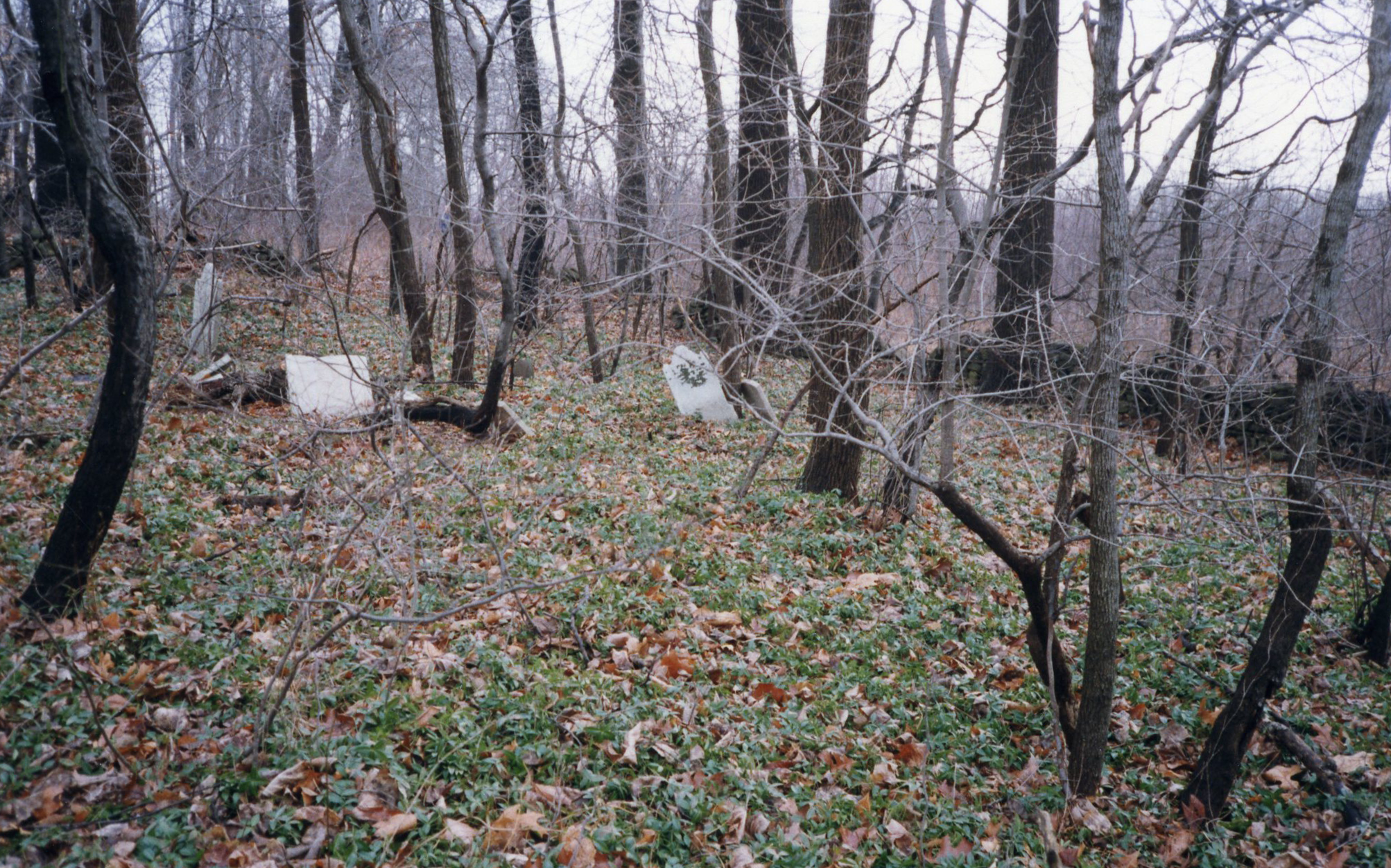
This house is just about gone. It won’t be long. This past March, I wandered through the honeysuckle and multiflora to try to get some decent pictures, but wasn’t very successful. Sleeping Beauty would never be wakened in that place, it so well guarded by weeds and fallen trees. Sadly, what is probably the oldest part of the house has already caved in. If I could have gotten closer, I might have been able to see some of the old woodwork inside, but that just wasn’t possible.
Hunterdon County Needlework and Hunterdon County in the Civil War.
On Saturday (June 1st) I visited the Hunterdon County Historical Society in Flemington to see what had become of the familiar old Deats Memorial Library. Significant changes have been taking place there, triggered by the need to meet building requirements for handicap access. The results are impressive, and I am looking forward to spending time in these new digs.
On Saturday, June 15th, a large group of people gathered to follow Dennis Bertland on his walking tour of Sergeantsville. It was fascinating and fun. Dennis showed us how the village evolved from its earliest days. And it was great to see so many people with memories of old Sergeantsville. Towards the end of the tour the subject of Skunktown came up. Sue Lockwood told a story about its origin (there are several versions; see What’s In A Name). She said the name came from the fact that there was once a tanner here who sold skunk pelts. I’ve heard that before, but this time I got to thinking.
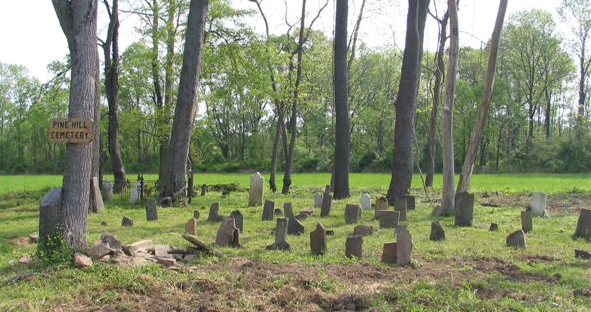
This article is about one of Delaware Township’s most secretive burying grounds, and is part of a series on Delaware Township cemeteries. It is also a follow-up to my series of articles on Buchanan’s Tavern, since Archibald Buchanan was buried here.1
In 2009, I published an article about this interesting cemetery on the website The Delaware Township Post. This coming June, this cemetery will be the focus of a celebration; most of the original Williamson farm has been purchased from Bryce Thompson by the N. J. Conservation Foundation in partnership with the State of New Jersey, Hunterdon County and Delaware Township. The cemetery is part of this new addition to preserved lands in our town. I am delighted! Here is the article:
TAKE NOTICE ! THAT the Township Committee of the townships of Amwell, Delaware and Raritan, will meet at John W. Larason’s on Monday the 2d day of April next, to settle with the several township officers. – All persons in said townships having damage done to their Sheep by dogs, are requested to present their bills to said committee on the day above named before 1 o’clock P. M. If there is not a sufficiency of Dog Tax to discharge said bills, there will be a dividend struck at that time, and those not presented will be disbarred from a benefit of the same. – By order of Town Committee. {signed} J. Gary, Clk. March 14, 1838, the HunterdonGazette.
At the first town meeting, the Township Committee voted that $1,000 was to be raised for making and repairing roads. Municipalities were responsible for their roads, while the county took responsibility for the bridges. Generally, it was the landowners along the roads who maintained them, so you can imagine what condition they were in: dust in the summer, mud in the spring and downright impassible in the winter, unless you had a sleigh. The township named many people to be Overseers of Roads. It’s hard to say exactly what their responsibilities were. Most likely, they managed the work that was ordered by the Surveyors of Highways.
Where was Buchanan’s Tavern? Recently,1 I found the first tavern where I didn’t expect it, on the west side of Route 579 near the intersection with Route 523. Most people think it was on the east side of the road, where the Miceks now have a small farm. They are right—there was a Buchanan’s tavern there, but it was the second Buchanan’s Tavern, and here is the rest of the story.
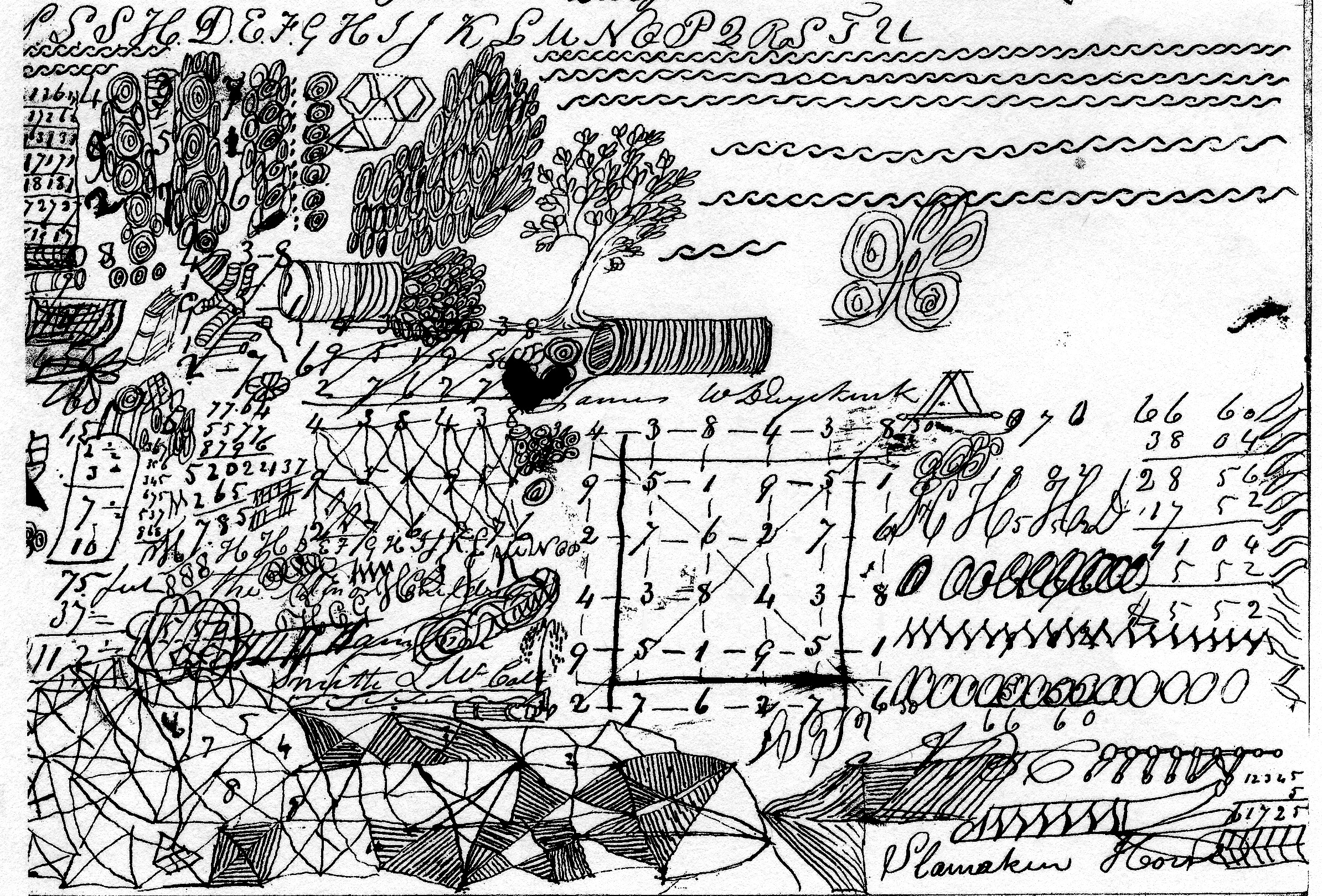
I’ve been hard at work trying finish up the saga of Buchanan’s Tavern, and it still isn’t done. Still some last minute questions to resolve. But I want to share this little surprise I found in the Guardianship papers for the children of Archibald Buchanan dec’d (File No. 73). I guess the Surrogate’s Clerk had some empty moments to fill.
Found on minutes of a hearing in the guardianship papers for Archibald Buchanan dec’d, No. 73
Was the clerk’s name ‘S. Camaken Houd’ ? Love the tree, the book and the number square.