

Last Sunday, I gave a talk to the Lambertville Historical Society about how to research one’s property in Hunterdon County, with a special focus on Lambertville. It was a great group of people, and I got a chance to appreciate how awesome old photos look when projected on an enormous screen. It was also nice to show many more pictures than I can reasonably do on this blog.
Sources
In My Library, No. 9
The Martin Family History, vol. 1, Hugh Martin (1698-1761), Hunterdon County, NJ
by Francie Lane, 2014, in four volumes
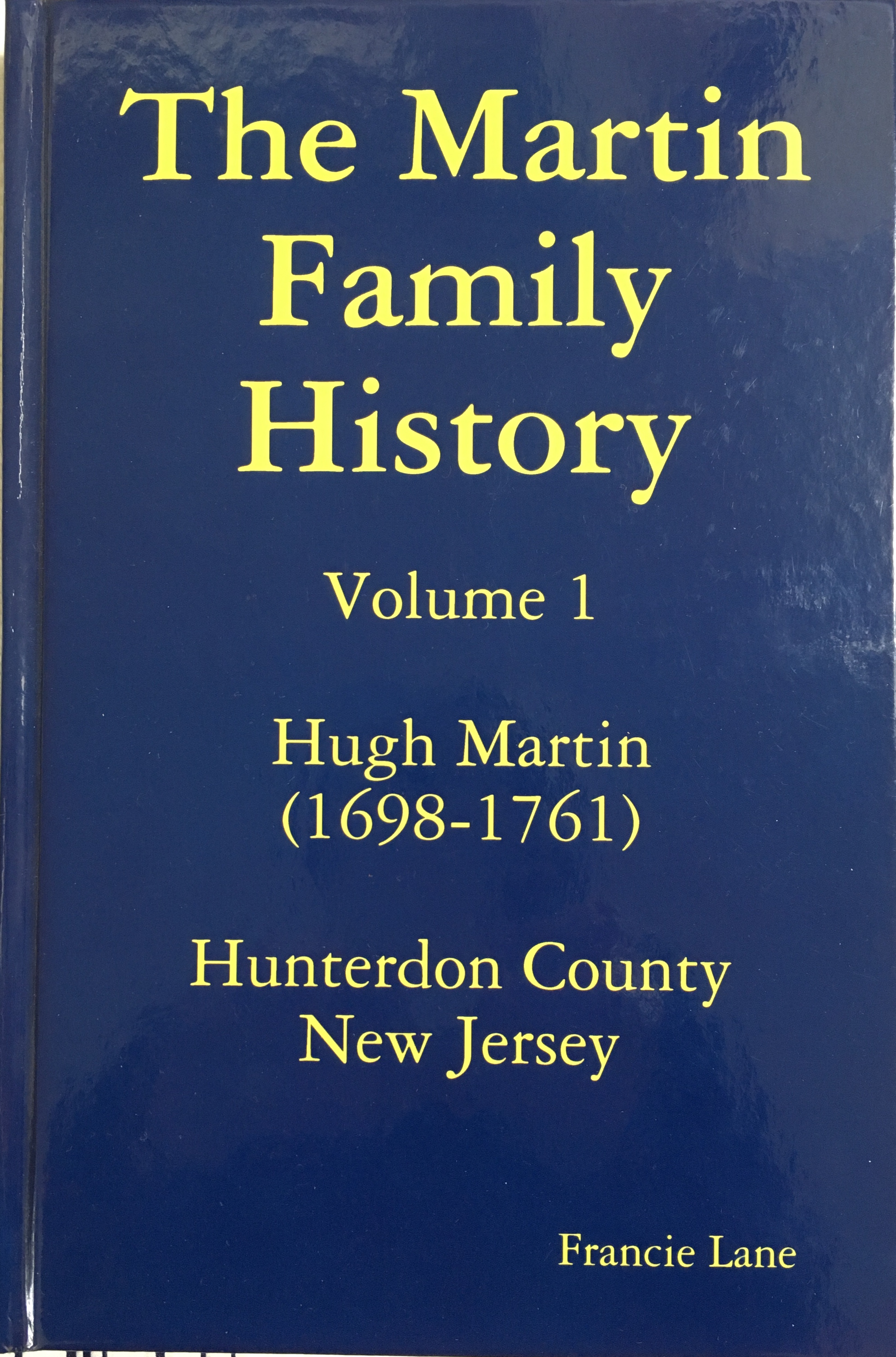 This genealogy covers the family of Alexander Martin of Scotland or Northern Ireland, born about 1670, who emigrated to America with his second wife and his eight children. Each of these children gets a chapter describing their families based on Ms. Lane’s extensive research. There is one extra chapter on Rev. Thomas Martin, son of Hugh, grandson of Alexander. Since so many members of this family lived in Hunterdon County, the index includes a list all the towns in Hunterdon that were mentioned, a feature I appreciate.
Like many others, Ms. Lane was frustrated by the lack of a good genealogy about her ancestors, so she remedied the omission by writing her own. Considering how important the Martin family is to Hunterdon’s history, it’s a good thing she did. The second volume will also be of interest to Hunterdon researchers. It covers descendants of Col. James Martin (1742-1834) and Martha Martin Rogers (1744-1825), children of Hugh Martin.
Copies of all four volumes may be obtained at the website www.lulu.com. Type “Francie Lane” in the search box. A fifth volume is in the works.
Remembering Bill Hartman
Bill Hartman was one of those people whose loss is deeply felt by anyone who knew him, including me. I have not yet seen an obituary for him in the Hunterdon County Democrat, which seems odd considering how important he was to so many of us.
The Pittstown Roads
In My Library: “All Roads Lead to Pittstown” by Stephanie B. Stevens
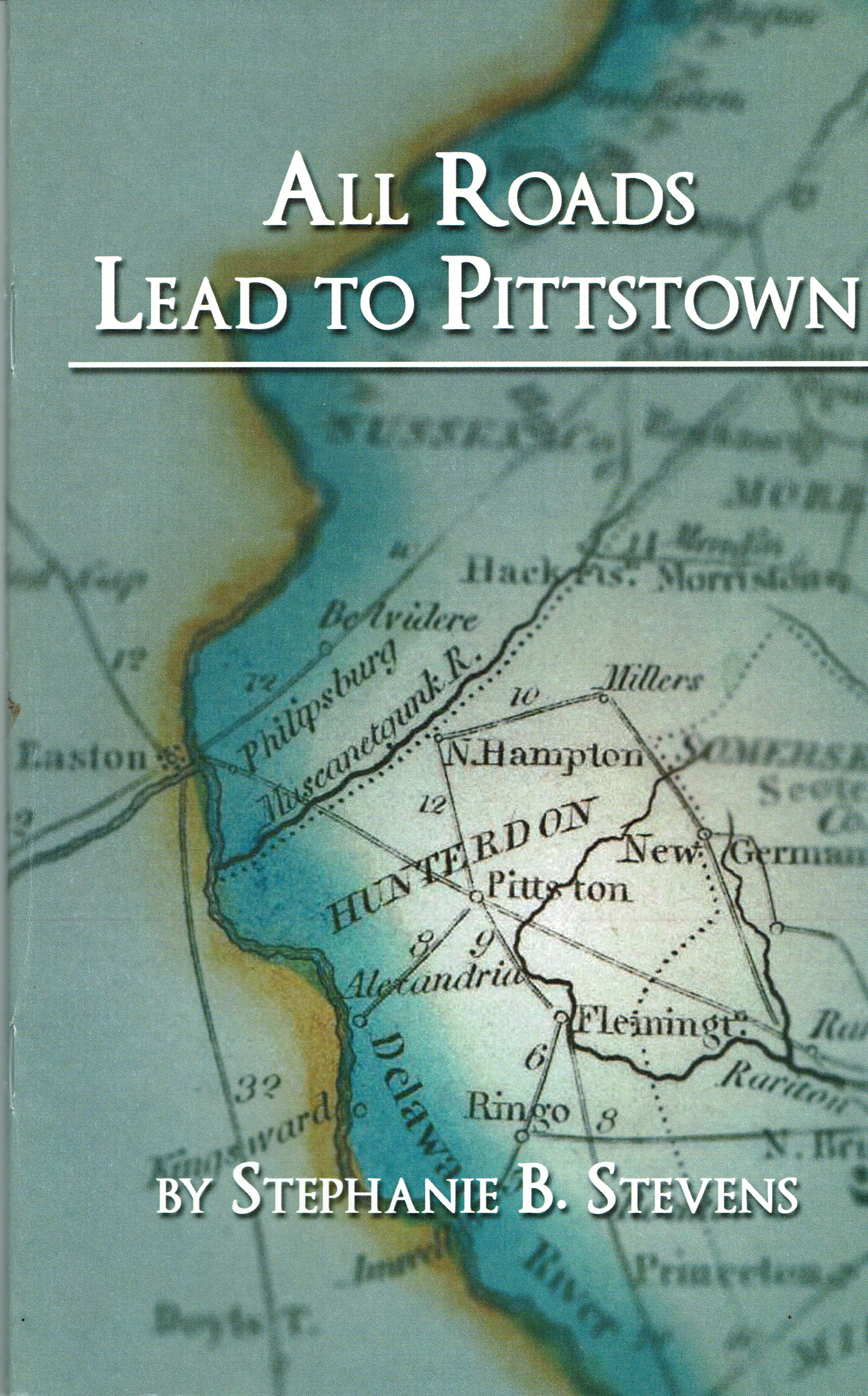 Better late than never. I’ve finally read Stephanie Stevens’ book All Roads Lead to Pittstown, published by the Hunterdon County Cultural and Heritage Commission. What a fascinating story she has to tell. I was dimly aware of Pittstown’s role in the Revolution, but what Stephanie has found adds enormously to our knowledge of the time. She managed to find references to Pittstown (specifically the mills of Moore Furman) in the letters of George Washington, the pension application of William Anderson, and the journal of James Parker, whose farm was located on Route 513 between Clinton and Pittstown.
A Proprietary History
A new history of the New Jersey proprietors and their jurisdictions
Today the mail brought me the latest issue of the Genealogical Magazine of New Jersey, published by the Genealogical Society of New Jersey. This issue, vol. 89, #4, departed from the usual format by devoting the entire magazine to one article, in celebration of the 350th anniversary of the creation of New Jersey.
What Comes from Owning the Land
In My Library: Owning New Jersey, Mapping New Jersey, Owning the Earth and New Jersey Linseed Oil Mills
 Owning New Jersey; Historic Tales of War, Property Disputes & the Pursuit of Happiness
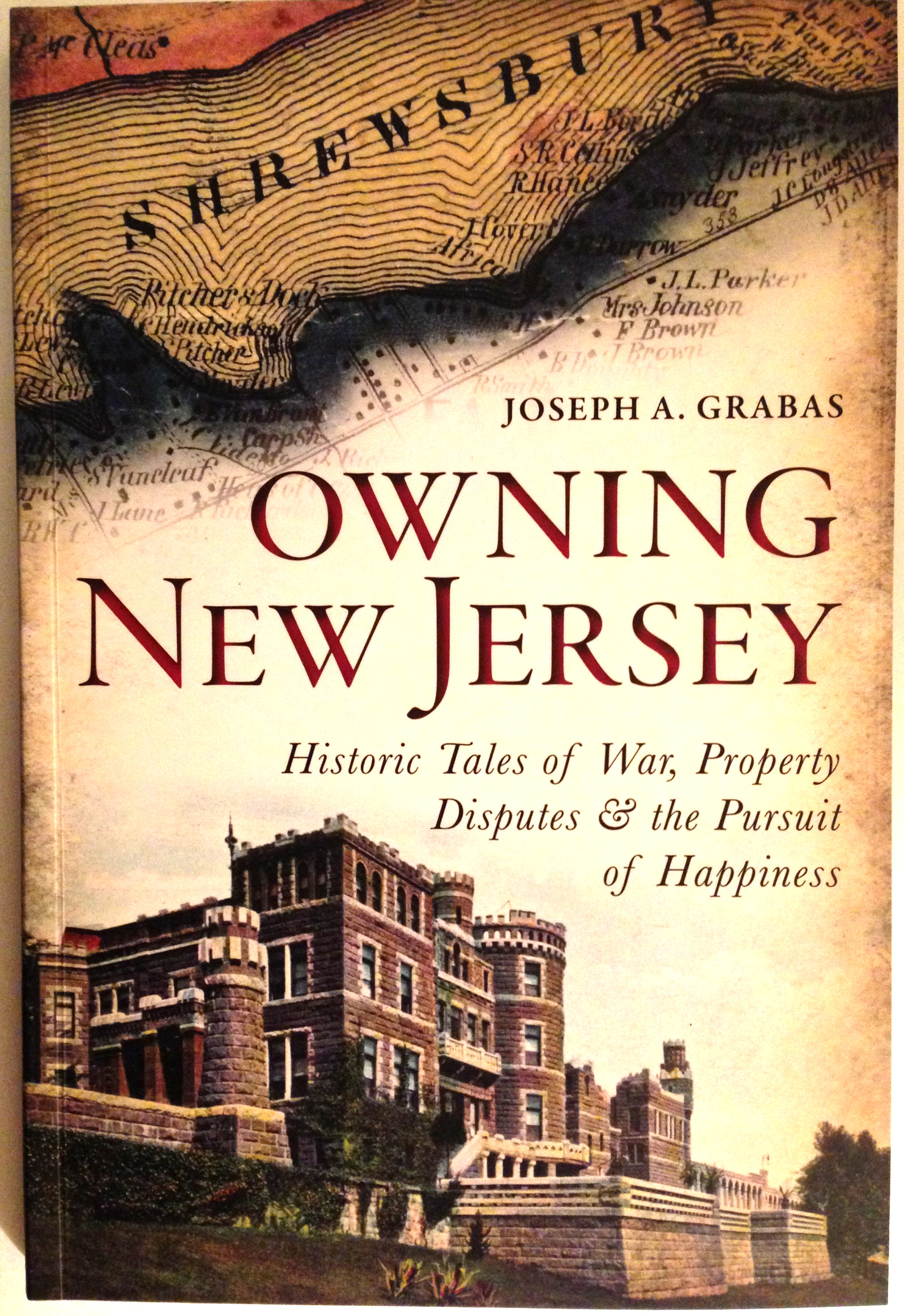
by Joseph A. Grabas, published by The History Press, 2014
What a great name for a book. I’ve wanted to own this book for decades, even though it did not exist until now. Joseph Grabas is a well-known figure among New Jersey historians, for his ability to take what he has learned from his many years as a title searcher and turn it into fascinating New Jersey history. He’s done a beautiful job of showing how interrelated land ownership and politics can be, and how those systems have influenced New Jersey history right from its very beginning. It’s also a very readable book. It is easy to overlook how much we can learn from old records—records that seem to be dry and uninteresting, unless an inquiring mind like Mr. Grabas takes a close look at them. Then they reveal great human dramas, both comedic and tragic. This book has much to teach us.
In My Library: Four New Books
Governors of New Jersey (revised and updated), Roadside Geology of New Jersey, Lambertville’s Legacy and Land Records of Bucks County.
New Jersey’s Covered Bridges
Richard J. Garlipp, Jr. New Jersey’s Covered Bridges, Images of America, Arcadia Publishing, 2014.
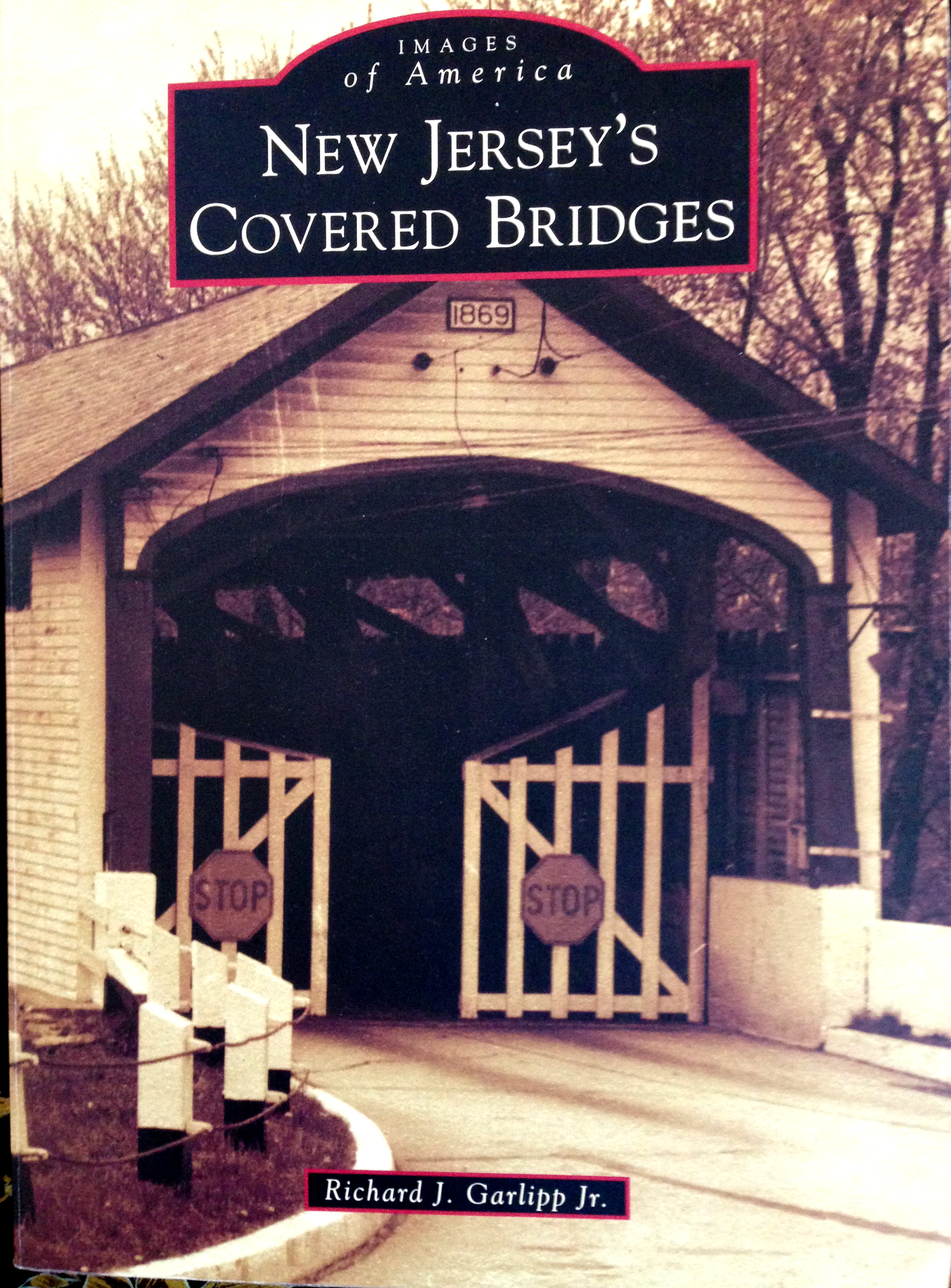
If you’ve ever had first hand knowledge of a story in the newspaper, chances are you’ve said to yourself, “the reporter got it wrong.” This also happens with books, including this one. Mr. Garlipp has long been a student of the history of covered bridges, and has undertaken a large and under-reported subject. But Arcadia books are not held to a very high standard and do not engage in fact-checking, so the results are sometimes a disappointing mixture of fact and fantasy. History is challenging, and mistakes are all too easy to make, as I have often learned to my dismay. I just wish this book had been better.
House Histories, part two
This is the second part of my article on how to do a house history, published March 29th. If you followed through with that article, you will now have a more or less complete chain of title. So, what next?
Step Four. Flesh Out the Story
A chain of title for your property is wonderful to have, but, really, all it is is a list of names, dates and sources. There’s no story there. It’s not really very interesting until you start digging and learn about who these people were, what their lives were like. Were they rich, poor, farmers, merchants? Were they important in their community? Did they get into trouble? This is where genealogical skills come into play.
NJ History Online
I recently discovered some interesting articles online about New Jersey history. For instance:
“Mutiny of the New Jersey Line” by Michael Schellhammer (March 19, 2014)
Nice summary of the events of the winter of 1780-81 when NJ troops stationed at Pompton became fed up with their conditions. Written in casual, non-academic language, perfect for us busy folks who love history but have other things to distract us. Considering that the mutineers had agreed to return to camp, it is surprising that Gen. Washington took such a strong position against them. Despite the fact that the NJ men only wanted to return home because their enlistments had expired, Washington and Howe determined to make an example of them, to discourage insubordination throughout the army. Two men were executed: Sergeant David Gilmore and Sergeant John Tuttle. Sergeant Major Grant would have been, but officers were persuaded he was not a ring leader that they thought he was. It was a high price to pay for a disciplined army.