

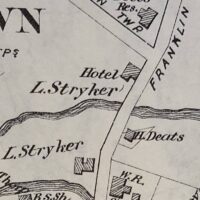
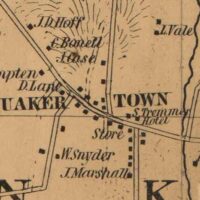
Because there has been some confusion about exactly where Sen. John Lambert lived, I have spent the past two articles determining that his farm was located on Seabrook Road and not on Lambertville-Headquarters Road, as some have thought. The confusion was caused by the fact that both farms were owned at one time by men named John Lambert and Gershom Lambert.
Sen. Lambert’s Farm, pt 2
A continuation of the article on Sen. John Lambert’s home farm.
Having discovered which of two farms belonged to Sen. John Lambert, I realized how amazingly interconnected the Lambert family was. That will hold true even more so here in part two. However, I have not done all the research that could have been done before publishing this article. It was a question of when to stop.
Two Lambert Farms
There are two farms in southern Delaware Township that are particularly interesting. They were part of the old Dimsdale proprietary tract north of Lambertville until 1750, when John Lambert, a recent immigrant from Connecticut, purchased it.
Who Collected the Boats?
Who really found the Delaware River boats in December 1776? the boats that Gen. Washington was supposed to rely on to carry his army across the river on Christmas Eve? For a long time I was certain it was David Johnes of Amwell, working with Daniel Bray and Jacob Gearhart. Now I’m not so sure. In fact, I now have serious doubts.
The Consequences of a Scam
Taylor and Bray, continued.
This is the third in a series of articles about the founding of the town of Clinton in 1828. The two men who made this happen, Archibald S. Taylor and John W. Bray, Jr., came to grief in a fairly short time. The Town succeeded, but the founders failed miserably, and their original friendship turned into a deep hostility. This article focuses on what happened to them after Bray’s misdeeds were discovered.1
The Ruin of A. S. Taylor
In my last post I wrote about how the town of Clinton came to be. The man who made it happen was John W. Bray, with the financial backing of his brother-in-law Archibald S. Taylor. Building lots were laid out and sold, merchants and residents moved in and a new town came to life. In 1832 The Newark Daily Advertiser referred to Clinton as “a flourishing manufacturing village.”
However, Bray took some shortcuts that had dire consequences for his financial backer, and for himself.
The Town of Clinton Is Born
Clinton Began As a Speculative Venture
The history of the town of Clinton is a fascinating one. The borough has so much character and charm, but it had a rocky start.
A Sergeantsville History
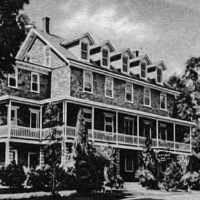
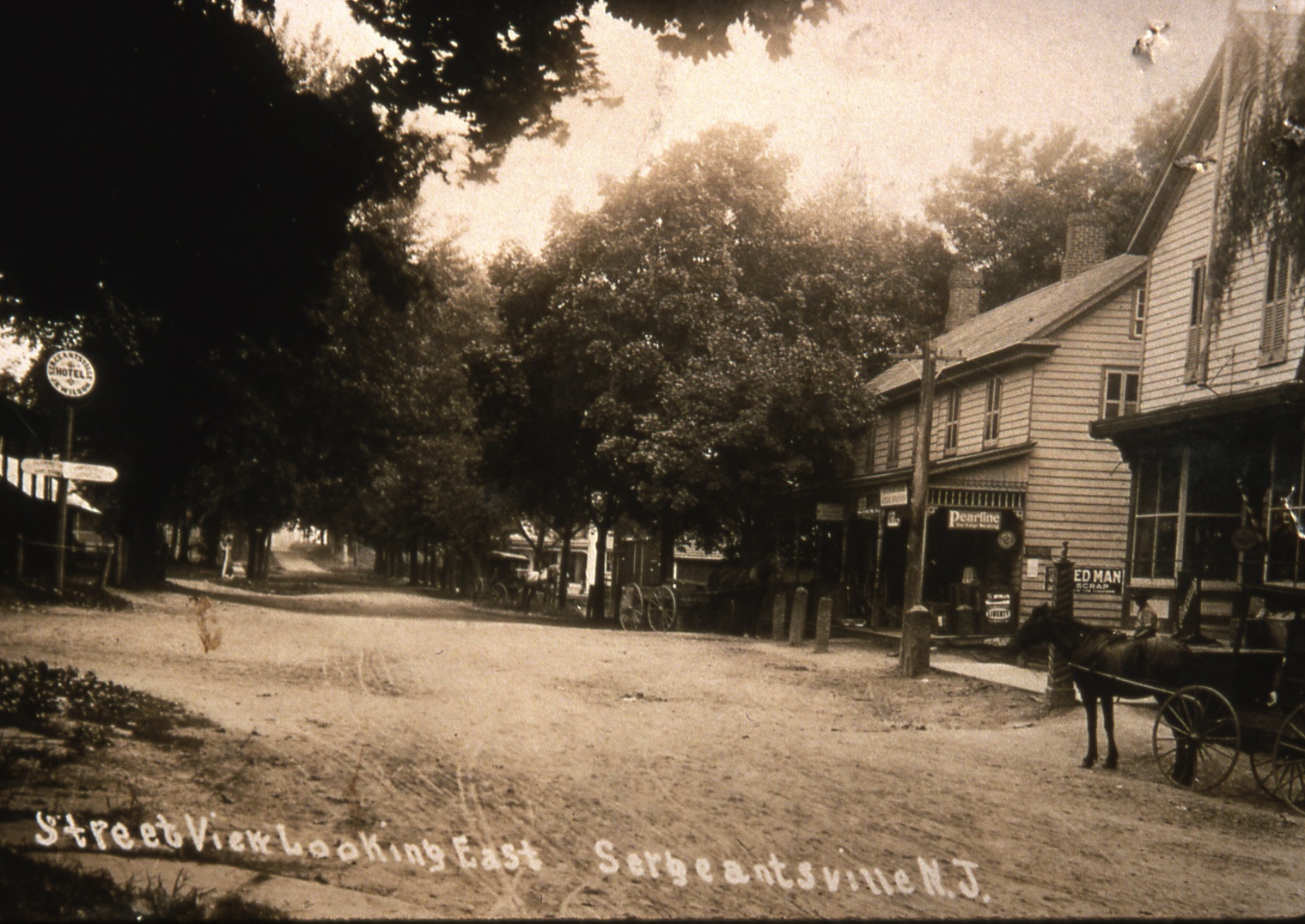 While working on a history of the Sergeantsville Inn, I realized that this would be a good time to publish Egbert T. Bush’s article about the places that made Sergeantsville such an interesting little town. Mr. Bush did not have the advantage of adding photographs the way I do. These pictures come from the postcard collection of Paul Kurzenberger. (Note that Mr. Bush’s article is in italics; my comments are not.)
Sergeantsville Inn, part three
Three of a Kind
Recently I got a chance to look through Paul Kurzenberger’s postcard collection and found this gem:
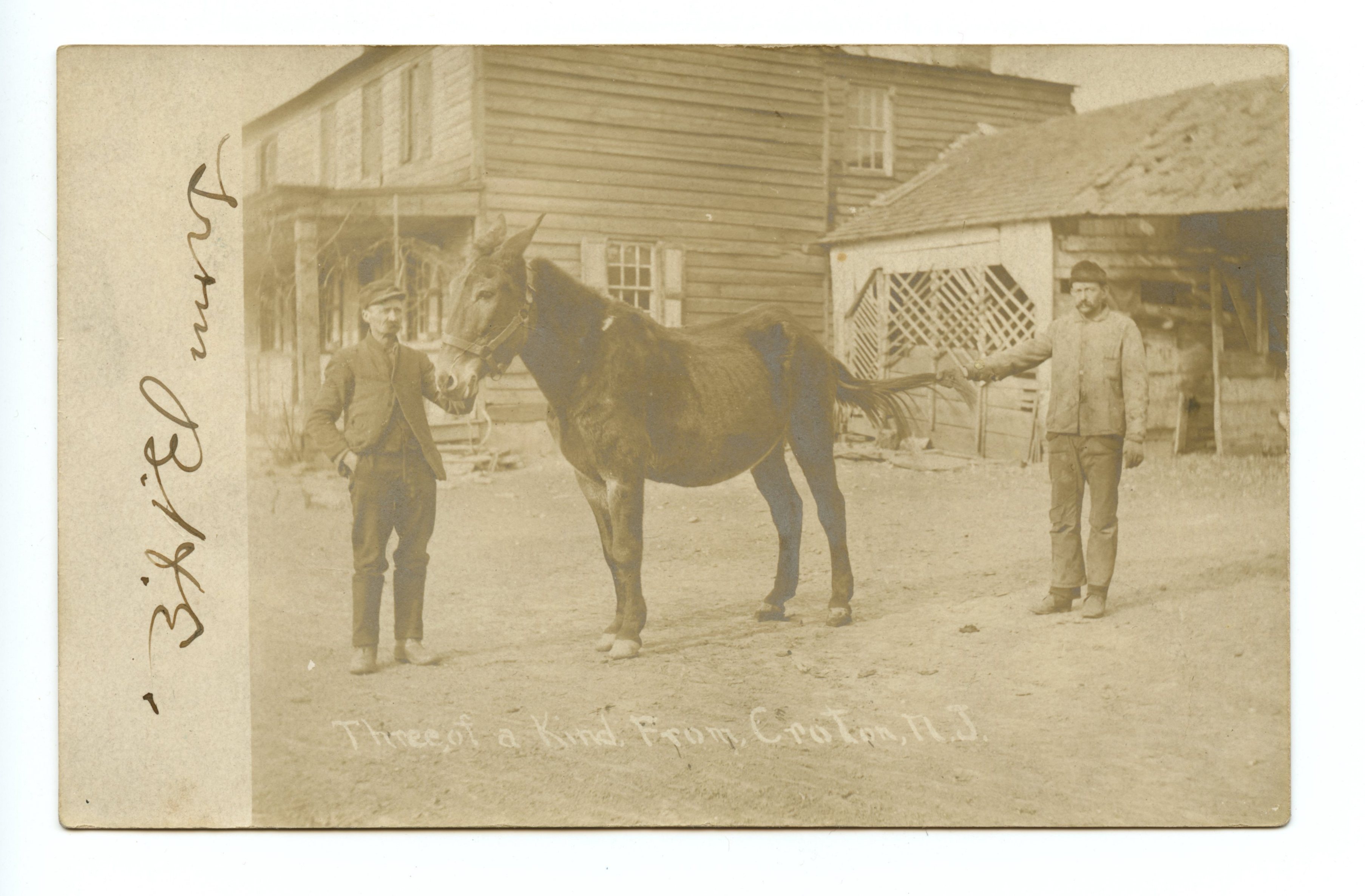 It was too funny not to scan and save. As you see, the caption reads “Three of a kind, from Croton, N.J.” After my chuckles subsided, I began to wonder who in Croton sent this postcard, and who received it.